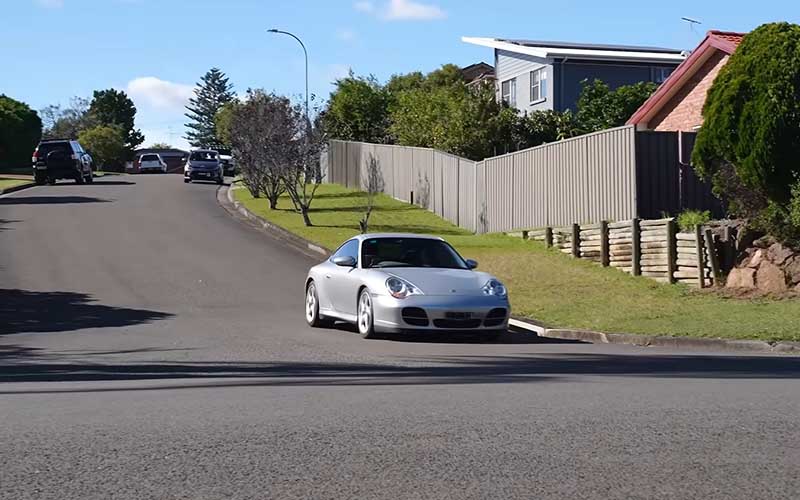
The Porsche 911 996 occupies an interesting place in Porsche history. Produced from 1997 to 2005, it was the first mass-produced water-cooled 911 and introduced the now-famous M96 flat-six engine. Today, the 996 offers one of the more affordable ways into classic 911 ownership, but its relatively low purchase price can be misleading. A neglected 996 can quickly turn into an expensive project.
The good news is that most of the common problems are well known, and many have established fixes. If you are buying or already own a 996, these are five of the areas worth paying particular attention to.
1. Intermediate Shaft (IMS) Bearing
The IMS bearing is probably the most famous mechanical concern associated with the 996. The intermediate shaft drives the engine’s camshafts, and its bearing can wear or, in some cases, fail.
The severity of an IMS failure comes from what can happen afterward. If the bearing fails, the intermediate shaft can move out of alignment and potentially cause the engine’s timing to jump. Metal debris from a failing bearing can also circulate through the engine’s oil system. In the worst cases, the result is catastrophic engine damage.
Not every 996 will suffer an IMS failure, and the risk varies depending on the specific engine and model year. Later cars generally received revised bearing arrangements, while earlier cars are particularly associated with the issue.
If you are buying a 996, finding out whether the IMS bearing has been replaced is useful, but documentation matters. A reputable Porsche specialist can also inspect the engine and advise whether preventative work is appropriate.
2. Rear Main Seal (RMS)
The rear main seal, or RMS, is another common 996 talking point. Located between the engine and transmission, this seal prevents engine oil from escaping around the crankshaft.
When the seal begins to leak, oil can appear between the engine and gearbox. Unfortunately, replacing it isn’t a simple job because the transmission generally has to be removed to access the seal.
An RMS leak is therefore an excellent example of a relatively inexpensive component creating an expensive repair because of its location.
A small amount of oil staining doesn’t necessarily mean the car needs immediate major work, particularly on an older vehicle. However, significant or active leakage should be investigated. If the clutch is already being replaced, it can make economic sense to inspect the RMS at the same time.
3. Cooling System Components
The 996’s move to water cooling brought major benefits, but it also introduced a number of cooling-system components that can cause trouble as the cars age.
Radiators and air-conditioning condensers are positioned at the front of the car, where they are exposed to road debris, dirt and moisture. Over time, they can corrode or become clogged. The plastic coolant expansion tank is another component known to become brittle with age and can eventually crack.
Coolant hoses, water pumps and other components can also deteriorate on an older 996.
Cooling problems deserve prompt attention. A coolant leak might initially appear minor, but allowing the engine to overheat can turn a relatively straightforward repair into a much more serious engine problem.
When inspecting a 996, check for coolant residue, unexplained coolant loss, temperature fluctuations and evidence of previous overheating.
4. Suspension Bushes and Control Arms
Even a mechanically healthy 996 can feel tired underneath if its suspension components are still original.
The front and rear suspension contain numerous rubber bushes, control arms and other components that deteriorate with age and mileage. Once the rubber becomes cracked or soft, the car can develop vague steering, uneven tyre wear, knocking noises or instability under braking.
The symptoms can be subtle at first. A 996 may still drive reasonably well while no longer having the precise, planted feeling expected from a Porsche.
Replacing worn suspension components can transform an older 996. It is also an area where condition matters more than the odometer alone. A high-mileage car with recently refreshed suspension may drive considerably better than a lower-mileage example that has spent two decades sitting on its original rubber components.
5. Electrical and Interior Components
Age-related electrical problems are becoming increasingly common as the earliest 996s approach 30 years old.
Window regulators, central locking mechanisms, switches, instrument-cluster pixels and various sensors can develop faults. The ignition switch is another component worth knowing about, as failures can cause a range of strange electrical symptoms.
Interior components can also show their age. Headliners can sag, leather can shrink or wear, and plastic trim can become sticky or brittle. These issues aren’t normally mechanically serious, but they can add up when restoring an older car.
The important thing is to test everything before buying. Operate every window, lock, switch and electrical accessory rather than assuming that small faults will be cheap to fix.
Buying a 996: What Matters Most?
The 996 isn’t necessarily an unreliable Porsche; it is simply an older sports car with several well-documented failure points. At this age, maintenance history and overall condition are usually more important than finding a car with the lowest possible mileage.
A pre-purchase inspection by a Porsche specialist is strongly recommended. Ideally, the inspection should cover the engine, cooling system, clutch, transmission, suspension, brakes and underside of the car, as well as checking for oil and coolant leaks.
The most important lesson is not to buy a 996 based purely on its purchase price. A cheap car needing an IMS-related repair, suspension refresh, cooling-system work and a clutch can quickly cost considerably more than a well-maintained example.
Buy the condition, not just the badge or mileage, and the 996 can be an extremely rewarding way to experience a water-cooled 911.